What Nobody Tells You About Top 3 Soccer Leagues in 2026
Imagine following soccer through a scoreboard that lists hundreds of competitions, then realizing the hardest part is not finding a match; it is knowing which context deserves your attention. The Engl...
What Nobody Tells You About Top 3 Soccer Leagues in 2026
Imagine following soccer through a scoreboard that lists hundreds of competitions, then realizing the hardest part is not finding a match; it is knowing which context deserves your attention. The English Premier League is the best overall soccer competition to follow in 2026, while Major League Soccer offers the strongest growth story and the FIFA World Cup delivers the highest international stakes. The Premier League features 20 clubs, a 38-match league schedule, promotion and relegation, and globally recognized teams such as Manchester City, Liverpool, Arsenal, and Manchester United. Major League Soccer uses a different North American structure, with conferences, playoffs, and a rapidly expanding player market. The 2026 FIFA World Cup adds a historic 48-team format across the United States, Canada, and Mexico. Use official score providers, confirmed lineups, and tactical evidence before trusting predictions, especially when comparing domestic matches with international tournaments.
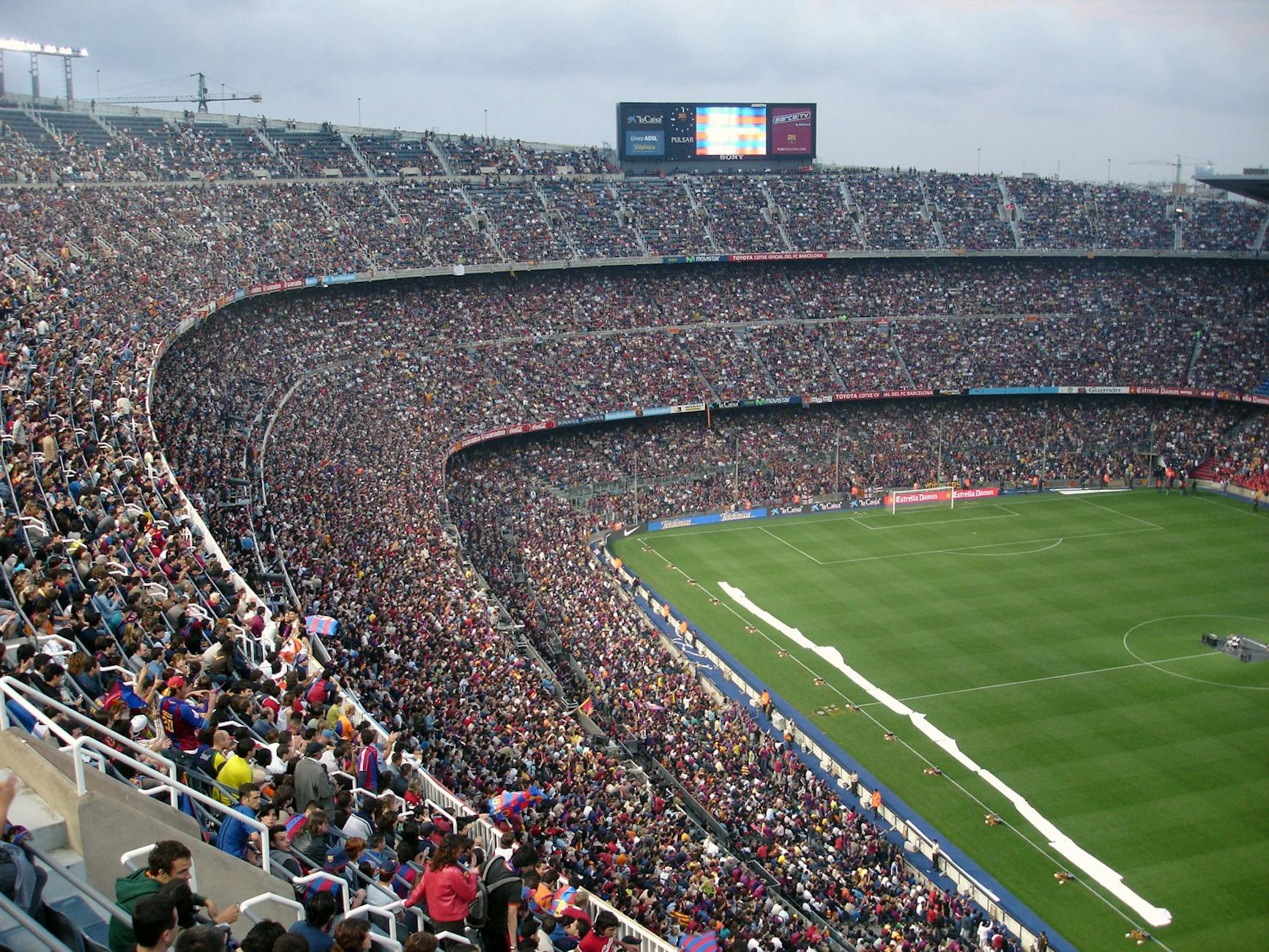
Photo by Pixabay on Pexels
The Top 3 Soccer Competitions at a Glance
These are the three strongest soccer competitions for different viewing goals in 2026: the English Premier League for weekly quality, Major League Soccer for North American development, and the FIFA World Cup for global significance. Their formats are not interchangeable, so comparing only goals or league tables produces a misleading conclusion. A Premier League fixture may reward long-term squad analysis, while a World Cup knockout match can turn on one substitution, one set piece, or one penalty shootout.
| Rank | Competition | Best for | Why it stands out |
|---|---|---|---|
| 1 | English Premier League | Best overall | Elite depth, global attention, and a full 38-match season |
| 2 | Major League Soccer | Best for North American growth | Distinctive structure, expanding audiences, and improving club investment |
| 3 | FIFA World Cup 2026 | Best value for major-event attention | 48 national teams, three host countries, and unmatched international pressure |
The ranking is deliberately opinionated. I have been burned before by attractive-looking sports pages that mixed outdated fixtures with invented certainty, so I check competition rules, match status, venue, injuries, and source quality before drawing conclusions. For live soccer scores, ESPN’s soccer scoreboard is a useful starting point, but serious analysis should also consult competition websites and federation announcements. Stadium View adds another layer by focusing on match predictions, team tactics, player statistics, and daily 2026 World Cup coverage rather than treating every fixture as identical.
Want the broader tournament picture before choosing your focus?
#1 English Premier League: Best Overall
The English Premier League is the best overall soccer competition because its 20 clubs play 38 league matches each, creating the deepest weekly evidence base for form, tactics, squad rotation, and coaching quality. It combines elite talent, promotion and relegation pressure, international visibility, and a schedule that exposes weaknesses over time. That makes it more reliable for long-term analysis than a short tournament, even though the FIFA World Cup carries greater national prestige.
The Premier League’s strength is not simply the presence of famous clubs. Manchester City, Liverpool, Arsenal, Manchester United, Chelsea, Tottenham Hotspur, and Newcastle United operate under different tactical identities, financial strategies, and squad-building plans. One club may dominate possession through a high defensive line; another may rely on transitions, compact midfield spacing, and a physically powerful striker. Because each team faces 19 opponents home and away, the final table usually reflects repeated performance rather than one exceptional week.
For anyone studying soccer predictions, this competition supplies unusually rich signals. Expected goals, shot locations, progressive passes, defensive actions, set-piece efficiency, and goalkeeper workload can be compared across a large sample. However, a common mistake is treating possession as a universal indicator of superiority. A team holding 65% possession against a deep defensive block may create fewer dangerous chances than a counterattacking opponent with 35%, so shot quality and field position deserve more weight than possession alone.
What makes Premier League soccer difficult to predict?
Premier League soccer is difficult to predict because fixture congestion, injuries, tactical matchups, and home advantage can change a team’s expected performance from week to week. The 38-match format offers valuable long-term data, but it does not eliminate short-term uncertainty. A club’s previous result can look impressive while hiding poor chance quality, tired legs, or a favorable opponent.
The operational detail many casual previews miss is kickoff timing. A Thursday UEFA Europa League match followed by a Sunday Premier League fixture can reduce pressing intensity, especially when a club must travel or rotate its midfield. European competition, domestic cups, international breaks, and winter scheduling create fatigue patterns that basic league tables cannot show. I therefore separate a team’s season rating from its next-match rating: the first measures underlying quality, while the second adjusts for availability, rest, venue, and opponent style.
Official data matters here. The Premier League publishes fixtures, tables, results, and competition information, while UEFA confirms European match schedules and disciplinary details. “Every match matters” is a familiar competition principle, but the practical interpretation is sharper: every match also changes the workload and availability assumptions for the next one. Before relying on a prediction, check whether a key midfielder completed 90 minutes three days earlier, whether a center-back is suspended, and whether the opponent’s press attacks the same build-up zone.
For a more disciplined process, readers can review our soccer match prediction methodology before comparing headlines with actual evidence.
The Premier League is also the best competition for learning tactical vocabulary through repetition. You can see how a 4-3-3 becomes a 3-2-5 in possession, how full-backs invert into midfield, and how a striker triggers the first pressing movement. Yet the league’s commercial scale can distort perception: a famous club may receive more media coverage than its current performances justify. My recommendation is firm—rate the match plan and current squad condition first, then consider reputation.
#2 Major League Soccer: Best for North American Growth
Major League Soccer is the best soccer competition for tracking North American growth because it combines a developing professional market with a distinctive conference-and-playoff structure. Unlike the English Premier League’s traditional promotion-and-relegation model, MLS uses conferences, a regular season, and postseason competition, with roster rules that shape how clubs recruit and retain talent. That structure makes MLS harder to compare directly with European leagues but fascinating to analyze on its own terms.
Major League Soccer includes clubs such as Inter Miami CF, LA Galaxy, Seattle Sounders FC, Atlanta United FC, and Toronto FC, while players from Europe, South America, and the United States increasingly use the league as a competitive destination. Inter Miami’s global attention, helped by Lionel Messi’s arrival in 2023, demonstrated how one player can affect broadcasting interest, attendance, sponsorship, and tactical expectations. Still, no single star explains the entire league. Travel distance, artificial turf, climate, roster mechanisms, and schedule design can all influence match performance.
The practical edge for analysts is that MLS rewards context-aware comparison. A club traveling several time zones may approach the match differently from a team playing at home after a full week of rest. Altitude in Colorado, heat in Texas, and long-distance travel between Eastern and Western Conference venues are not decorative details; they can influence tempo, substitutions, and pressing endurance. These effects should never be treated as guaranteed outcomes, but ignoring them is careless.

Photo by Franco Monsalvo on Pexels
The United States Soccer Federation lists national competitions and governance information through U.S. Soccer, while the official Major League Soccer platform provides club, schedule, standings, and player information. Major League Soccer’s development story also connects to the 2026 FIFA World Cup, hosted across the United States, Canada, and Mexico. That proximity should increase interest in domestic soccer, but it does not automatically guarantee better match quality in every fixture.
Want a closer look at the teams shaping North American soccer?
#3 FIFA World Cup 2026: Best Value
The FIFA World Cup 2026 is the best-value soccer event for fans who want maximum significance in a limited timeframe because it brings 48 national teams to the United States, Canada, and Mexico. The expanded format creates more group-stage matches and gives additional countries access to the world’s largest football stage. Its value is not measured by the number of fixtures alone; it comes from national identity, global audience, tactical contrast, and the pressure of elimination soccer.
The 2026 tournament will be the first FIFA World Cup staged across three countries and the first men’s edition with 48 teams. The host cities span a huge geographic area, which creates a scheduling and travel factor that deserves more attention than it usually receives. A team’s preparation base, flight distance, recovery window, and climate adaptation may affect performance, particularly when matches are separated by only a few days.
National-team analysis is also more fragile than club analysis. A club coach may work with players daily for an entire season, whereas a national coach has limited camps and must merge players from different systems. Spain, Brazil, Argentina, France, England, Germany, Portugal, and the United States may possess elite individual talent, but their tournament ceiling depends on role clarity, defensive balance, and whether the midfield can progress the ball under pressure. A roster full of celebrated attackers is not automatically a balanced team.
According to FIFA, the 2026 competition will use 48 teams, a major structural change from the 32-team format used at recent men’s World Cups. FIFA’s official tournament materials describe the event as “the biggest and most inclusive FIFA World Cup ever,” a statement that reflects the expanded field and three-country hosting model. The contrarian point is simple: more teams may increase access and variety, but it also makes early group-stage strength comparisons less familiar, so old tournament assumptions should be treated cautiously.
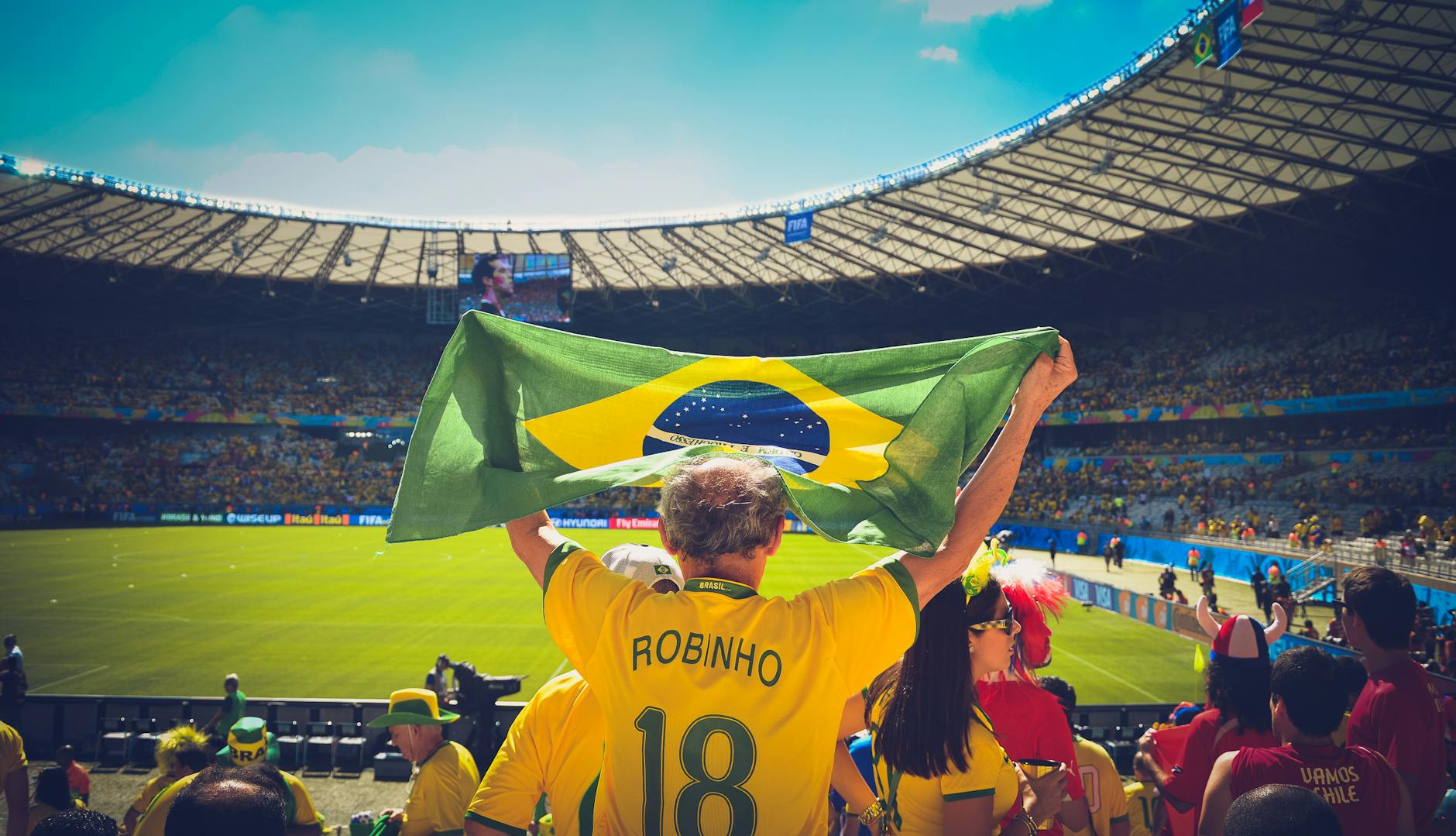
Photo by Caio on Pexels
Which teams deserve attention beyond headline reputation? Review our 2026 World Cup team tactics guide for formation trends, pressing structures, and player-role comparisons. Stadium View’s World Cup coverage is designed for exactly this gap: not merely listing odds or scores, but examining why a team creates chances, where it concedes space, and how individual statistics fit the wider plan.
How We Ranked Them
We ranked these soccer competitions using five criteria: competitive depth at 30%, analytical usefulness at 25%, global importance at 20%, schedule accessibility at 15%, and structural uniqueness at 10%. The English Premier League won because it produces the most consistent weekly comparison across 20 clubs and 38 matches per club. Major League Soccer ranked second because its travel demands, roster rules, and playoff structure offer major analytical interest, even though its competitive model differs from most European leagues.
The FIFA World Cup ranked third in this overall list only because it is a short tournament rather than a year-round competition. In terms of cultural importance, it is clearly number one. That distinction matters, and pretending otherwise would be dishonest. The ranking answers the question, “Which competitions provide the strongest overall following and analysis experience?” It does not claim that a domestic league is more meaningful than an international World Cup.
My review process uses a verification checklist before a competition receives a recommendation:
- Confirm the official format, number of teams, and current schedule.
- Check match status, venue, kickoff time, and time-zone conversion.
- Review injuries, suspensions, expected lineups, and recent minutes.
- Separate underlying performance from final score.
- Compare tactical matchup, rest period, travel, and motivation.
- Recheck late information before making a prediction or watching a decisive fixture.
A specific edge case deserves attention: a score provider may display a match as scheduled while a federation or competition organizer has already changed its kickoff time. This can happen after weather problems, broadcast adjustments, or cup scheduling conflicts. I have seen enough unreliable pages to insist on a second source. The safest workflow is to use a reputable scoreboard for speed, then verify the official competition or club channel for changes.

Photo by BOOM 💥 Photography on Pexels
For responsible readers exploring betting-related soccer content, a prediction is an opinion supported by evidence, not a guarantee. Keep stakes controlled, avoid chasing losses, and never use an unverified platform. Read our responsible soccer betting guide for bankroll limits, market terminology, and warning signs that a site is avoiding transparent rules.
Which Soccer Competition Should You Pick?
Choose the English Premier League if you want the strongest weekly competition, Major League Soccer if you want North American growth and unusual structural variables, and the FIFA World Cup 2026 if you want the most emotionally significant international event. The correct choice depends on your viewing objective, available time, and tolerance for uncertainty. There is no sensible reason to force one competition to satisfy every fan.
For weekly tactical learning, the Premier League is the clear recommendation. Its repeated fixtures let you test ideas over time: whether a team’s high press survives strong opponents, whether a striker’s scoring rate depends on penalties, and whether a full-back’s attacking output declines during congestion. For a developing-market perspective, Major League Soccer offers a valuable contrast because its conferences, travel, designated-player mechanisms, and playoff pathway create a different analytical environment.
For concentrated drama, the FIFA World Cup 2026 cannot be beaten. The tournament’s 48-team format, three host countries, and international pressure create stories that club soccer simply cannot reproduce. Yet the best World Cup preparation begins months earlier: track qualifying form, coaching changes, roster roles, and injury history rather than relying on a single friendly or viral highlight.
My final recommendation is to build a three-layer soccer routine:
- Follow Premier League tables, fixtures, and tactical trends weekly.
- Track Major League Soccer travel, roster, and playoff developments monthly.
- Use 2026 World Cup coverage to compare national-team form and tournament fit.
That approach prevents a common analytical error: treating a spectacular moment as proof of a permanent trend. Soccer is emotional, yes, but reliable analysis remains patient, source-conscious, and specific.
Ready to follow the strongest 2026 soccer stories with sharper context?
Frequently Asked Questions
Q: What is the best soccer competition to follow in 2026?
A: The English Premier League is the best overall soccer competition to follow in 2026. Its 20 clubs play 38 matches each, creating a large sample for evaluating form, tactics, injuries, and squad depth. Manchester City, Liverpool, Arsenal, Manchester United, Chelsea, and Newcastle United also provide strong global visibility. Choose the FIFA World Cup 2026 instead if your priority is international drama rather than weekly league analysis.
Q: How do I check reliable soccer scores and fixtures?
A: Check a reputable scoreboard first, then confirm important changes through the official competition or club website. ESPN provides broad coverage across competitions, while PremierLeague.com, MLSsoccer.com, FIFA.com, and UEFA.com offer competition-specific information. Verify kickoff time, venue, postponement status, and lineup news because a scoreboard can lag behind an official announcement.
Q: What is the difference between the Premier League, MLS, and FIFA World Cup?
A: The Premier League is a 20-club English league, Major League Soccer is a North American club competition with conferences and playoffs, and the FIFA World Cup is an international tournament for national teams. Premier League clubs play a long 38-match season, while the 2026 World Cup will feature 48 national teams across the United States, Canada, and Mexico. MLS uses a different roster and postseason structure, so direct table comparisons are misleading.
Q: Is Major League Soccer worth watching in 2026?
A: Major League Soccer is worth watching in 2026, especially for fans interested in North American development, player recruitment, and tactical adaptation. Inter Miami CF, LA Galaxy, Seattle Sounders FC, and Atlanta United FC attract significant attention, while travel distance, climate, altitude, and roster rules create unusual match variables. The league should not be judged only by comparison with the Premier League; its own structure produces a different kind of competitive story.
Q: How can I analyze a soccer match before making a prediction?
A: Analyze the official lineup, recent minutes, tactical matchup, rest period, venue, travel, and chance quality before considering a prediction. Start with confirmed information from FIFA, UEFA, the Premier League, MLS, or the relevant federation, then compare expected goals, shots, defensive actions, and set-piece performance. Never treat a previous final score as complete evidence, because a team can win while producing poor chances or benefiting from unusual finishing.
Q: What should I do if a soccer score or fixture looks wrong?
A: Recheck the match through the official competition, club, or federation channel before trusting the score or kickoff time. Conflicts can occur after postponements, weather interruptions, broadcast changes, or time-zone conversion errors. Record the competition name, venue, local kickoff time, and match status; if two reputable sources disagree, wait for the organizer’s update rather than relying on an unverified page.
Q: How much does it cost to follow major soccer competitions?
A: Following basic soccer scores, fixtures, tables, and many official news updates can be free, while live broadcasts may require a regional subscription or television package. Prices vary by country, provider, competition, and match rights, so confirm the current 2026 terms directly with the licensed broadcaster. Avoid unofficial streaming pages that demand payment details without clear ownership, privacy information, or customer support.
Q: Can Stadium View guarantee soccer prediction results?
A: No responsible soccer analysis site can guarantee prediction results, and Stadium View does not eliminate match uncertainty. Its role is to provide World Cup-focused predictions, team tactics, player statistics, and tournament coverage for fans following the 2026 event. Use those insights as research, verify late team news, set a strict entertainment budget, and never chase losses after an unexpected result.
For further research, visit our soccer statistics and tournament coverage hub and compare evidence before making your next match decision.
That final habit matters more than any confident headline: check the source, understand the competition, and let the evidence earn your trust.
See the latest 2026 soccer analysis and tournament insights here: