
Why Cape Verde’s 2026 Run Defied Expectations
The Cape Verde national football team is a rising African side representing the island nation of Cabo Verde in FIFA and CAF competition, and its progress has made the Blue Sharks a serious team to tra...
Why Cape Verde’s 2026 Run Defied Expectations
The Cape Verde national football team is a rising African side representing the island nation of Cabo Verde in FIFA and CAF competition, and its progress has made the Blue Sharks a serious team to track in 2026. Cape Verde reached the Africa Cup of Nations quarter-finals in 2023, achieved its first AFCON knockout victory, and built a squad shaped by both domestic development and a wide Portuguese-speaking diaspora. The team competes under the Federação Cabo-Verdiana de Futebol and plays most major home fixtures at Estádio Nacional de Cabo Verde in Praia. Its identity is based on compact defending, fast transitions, physically strong midfield play, and technically polished attackers. The practical takeaway is simple: assess Cape Verde through tactical matchups and confirmed line-ups rather than reputation alone, especially before using any prediction or betting market.
The Quick Comparison
| Category | Cape Verde national football team |
|---|---|
| Official name | Cape Verde national football team |
| Common nickname | The Blue Sharks |
| Governing body | Federação Cabo-Verdiana de Futebol |
| Confederation | Confederation of African Football, or CAF |
| FIFA association | Cape Verde |
| Home venue | Estádio Nacional de Cabo Verde, Praia |
| Continental breakthrough | AFCON quarter-finals in 2023 |
| Football identity | Compact structure, transitions, athletic midfield |
| Major talent pathway | Portugal, France, the Netherlands, and other European leagues |
| Best analytical angle | Defensive shape, wing progression, and set pieces |
The Cape Verde national football team is not built like a traditional African powerhouse with a huge domestic player pool, and that difference matters. Cabo Verde is an island country with a population far smaller than Nigeria, Egypt, or South Africa, so the national side depends heavily on scouting players with Cape Verdean heritage abroad. The result is a squad that can look more tactically mature than casual observers expect, particularly when players from Portugal and other European competitions arrive with strong positional habits.
I learned the hard way that football pages can make confident claims without checking competition dates, tournament formats, or player eligibility. So let us be precise: a recent scoreline is useful, but it never explains the entire Cape Verde performance. Possession, defensive distance, shot quality, opponent strength, travel, and the availability of players such as Ryan Mendes or Bebe can shift the real picture quickly. For broader tournament context, readers can also consult CAF’s official competitions information.

Imagine watching Cape Verde defend a narrow lead under pressure: the back line stays connected, midfielders close central lanes, and the first forward pass immediately searches for space behind the opponent’s full-back. That is the Blue Sharks at their most recognizable. Their strength is not constant domination; it is controlled resistance followed by sudden acceleration, especially through wide areas and second-ball situations.
For readers following matches through Stadium View, the useful approach is to separate emotional momentum from measurable evidence. A famous upset can raise expectations, but the next opponent may attack differently, defend set pieces better, or force Cape Verde to create against a low block. The team’s competitive edge is real, yet it is matchup-dependent. That is exactly why the Blue Sharks deserve serious study rather than exaggerated hype.
Want a closer look at tournament form and match context?
Round 1: Why Does Cape Verde’s History Matter?
Cape Verde’s football history matters because the national team transformed from a peripheral African side into a credible tournament competitor, highlighted by its first AFCON quarter-final appearance in 2023. That achievement followed earlier AFCON qualifications and showed that the Blue Sharks could survive a major tournament’s group-stage pressure. Their historical progress is best understood as steady infrastructure, diaspora recruitment, and tactical discipline rather than one lucky generation.
The national team became a FIFA member in the early 1980s and later developed a clearer international profile through regular CAF qualifying campaigns. Cabo Verde’s football culture is closely connected to Portugal because of historical ties, language, migration, and player development pathways. Many international players have therefore grown up in European football environments while retaining eligibility for the Cape Verde national football team.
The 2023 Africa Cup of Nations in Côte d’Ivoire was the defining recent marker. Cape Verde finished above expectations in the group stage, defeated Mauritania in the round of 16, and reached the quarter-finals before losing to South Africa on penalties. That result was not merely decorative. It demonstrated that Cape Verde could manage tournament nerves, defend against different attacking styles, and produce enough threat to win a knockout match.
According to the FIFA national team profile, international rankings should be treated as a moving snapshot rather than a permanent judgment. A team’s position can change sharply after qualifying windows because FIFA ranking calculations reward opponent strength and competitive results differently from friendly matches. This is one reason a Cape Verde prediction based only on a static ranking is a weak prediction.
- Historical foundation: FIFA membership and CAF competition created a consistent international pathway.
- Breakthrough moment: the 2023 AFCON quarter-final run confirmed tournament-level competitiveness.
- Modern advantage: overseas-based players add technical experience and tactical flexibility.
- Ongoing limitation: a smaller player pool can make injuries and suspensions unusually costly.
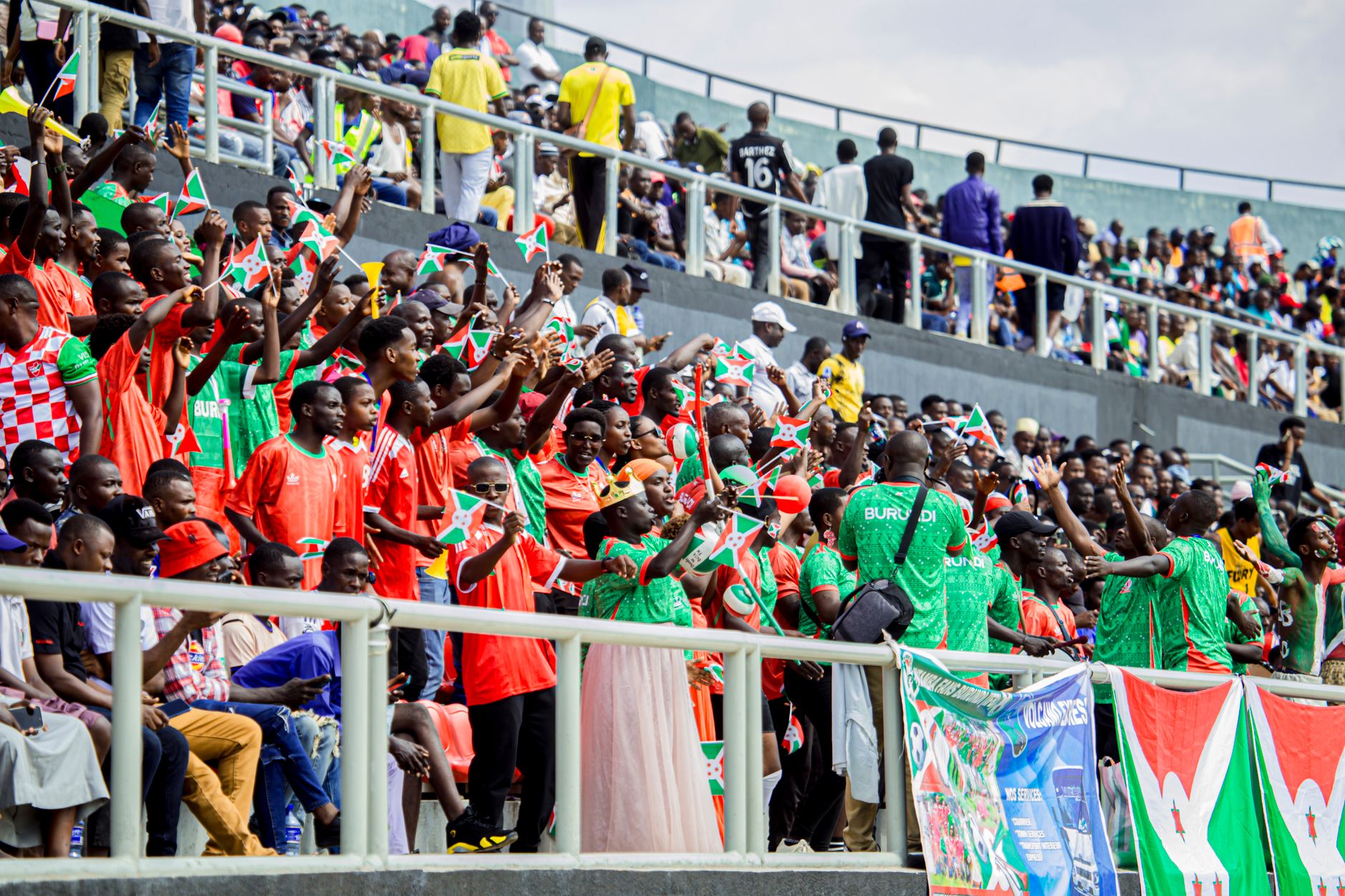
Photo by Chris wade NTEZICIMPA on Pexels
What Did the 2023 AFCON Run Prove?
Cape Verde’s 2023 AFCON run proved that the Blue Sharks could convert disciplined group-stage football into a knockout victory against a defensively organized opponent. The quarter-final appearance was their strongest modern continental statement and showed that compact defending, set pieces, and transition attacks could work over several matches. It also raised expectations for every subsequent qualifying campaign.
The less glamorous lesson is that tournament success creates a new problem: opponents stop underestimating the team. Cape Verde can no longer rely on surprise alone, so the coaching staff must prepare for deeper defensive blocks and more aggressive pressure against the first build-up pass. In my view, this is the team’s most important tactical test in 2026.
Round 2: How Does Cape Verde Play?
Cape Verde usually plays best when it can maintain a compact mid-block, protect the central corridor, and release quick attacks into wide channels. The team often values structure over needless possession, using energetic midfielders to contest second balls and create the first forward pass after a turnover. This approach makes the Blue Sharks dangerous against teams that push full-backs high but less comfortable when an opponent defends deep.
The tactical base can change according to the coach, available players, and opponent. A back four remains the most practical reference point, but the shape can become a 4-5-1 without the ball or a more aggressive 4-3-3 during possession. The important point is not the formation printed on a graphic; it is the spacing between the lines. If the midfield sits too deep, the striker becomes isolated. If the full-backs advance too early, transitions become exposed.
Ryan Mendes has often represented the team’s attacking experience, while Bebe has offered direct running, set-piece quality, and physical presence when selected. The exact squad changes over time, so confirmed team news remains essential. Players based in Portugal, France, the Netherlands, and other European leagues may bring superior weekly competition, but international football gives them fewer training sessions together.
A practitioner-level observation is especially useful here: Cape Verde’s attacking quality can look much higher when the first transition pass is completed within approximately three seconds of winning the ball. That timing forces the opponent’s midfield to turn and creates space for runners. If Cape Verde takes too many touches in the first phase, the opposing block resets and the Blue Sharks often become easier to contain.
To understand transition football more clearly, readers may also review our World Cup tactical analysis guide, particularly the sections on mid-blocks and counterattacking patterns.
See the latest tactical angles before judging a fixture.
Which Players Shape the Blue Sharks?
The Blue Sharks are shaped by experienced attackers, athletic midfielders, and defenders comfortable competing in physically demanding matches. Ryan Mendes provides leadership and wide attacking intelligence, while Bebe can add power, directness, and set-piece threat. Other squad members may emerge from Portuguese or French football, making the final roster and current club form more important than historical reputation.
For match analysis, I recommend tracking four player categories instead of obsessing over one star. First, check whether the main ball-progressing midfielder is available. Second, identify who takes corners and indirect free-kicks. Third, compare the starting full-backs with the opponent’s fastest wide attackers. Fourth, confirm whether the centre-forward can hold the ball under pressure.
This method produces better information than simply searching “Cape Verde star player.” A national team can be competitive because of a coordinated group, not because one individual dominates every match. It also protects readers from a common scam-like content trick: recycled player lists that include injured, retired, or uncapped footballers without checking the latest federation announcement.
Round 3: Can Cape Verde Compete in 2026?
Cape Verde can compete in 2026 if it preserves defensive organization, improves chance creation against deep blocks, and avoids losing key players to injuries or suspensions. The expanded FIFA World Cup format creates more opportunity for emerging nations, but qualification remains difficult because CAF includes several technically and physically powerful opponents. Cape Verde’s strongest route is disciplined consistency rather than trying to imitate a high-possession giant.
The 2026 World Cup context must be handled carefully. Qualification outcomes, group tables, and final tournament participation can change as official windows are completed, so readers should verify current standings through FIFA’s official 2026 World Cup competition page. ESPN match pages can help with recent schedules and scorelines, but a results page does not replace official federation or FIFA confirmation.
Cape Verde’s tactical profile gives it genuine upset potential. Against a favourite that dominates possession but leaves space behind its full-backs, the Blue Sharks can create valuable transition moments. Against a compact opponent that concedes territory but protects the box, Cape Verde may struggle unless its wide players deliver accurate crosses and its midfielders arrive at the edge of the area.
My contrarian conclusion is straightforward: Cape Verde may be more dangerous against a stronger opponent than against a weaker one. That sounds backwards, but it follows the tactical evidence. Strong teams usually attack with more numbers, which creates the open spaces Cape Verde wants. Weaker teams may sit deeper, forcing the Blue Sharks to solve a slower and more technical possession problem.

How Should You Read Cape Verde Match Statistics?
Read Cape Verde match statistics through chance quality, field position, and transition efficiency rather than possession percentage alone. A 42% possession share can represent an excellent performance if the team creates the clearer chances and protects the penalty area. Conversely, 55% possession may hide sterile circulation if the opponent prevents entries into the box.
Before evaluating a fixture, check:
- Shots inside the penalty area: these are more meaningful than total shots.
- Set-piece attempts: corners and free-kicks can decide closely balanced matches.
- Progressive passes after recoveries: they reveal whether transitions are functioning.
- Opponent field tilt: sustained pressure near Cape Verde’s box may expose fatigue.
- Starting XI continuity: repeated partnerships usually improve defensive communication.
- Travel and rest: international windows can create uneven preparation time.
An edge case that many generic previews miss is the effect of early goals. If Cape Verde scores first, its compact structure becomes a major advantage because the opponent must take more risks. If Cape Verde concedes first, the match becomes less comfortable because the Blue Sharks must carry more possession and create against an organized defence. Therefore, live analysis should focus on game state, not only pre-match odds.
For a broader framework, see the football prediction checklist before making any decision based on a single statistic.
Want a disciplined way to compare form, tactics, and team news?
The Final Score & Who Should Pick What
The Cape Verde national football team deserves to be treated as a tactically serious African competitor with a proven AFCON ceiling, not as a novelty side. Its 2023 quarter-final run, overseas-based player network, and disciplined transition game provide a credible foundation for 2026 ambitions. Still, the team is not unbeatable, and its limitations are clear: a small talent pool, dependence on key attackers, and occasional difficulty breaking down deep defensive blocks.
Pick Cape Verde when:
- The opponent commits full-backs high and leaves transition space.
- Cape Verde’s main attackers are confirmed in the starting XI.
- The Blue Sharks have set-piece specialists available.
- The match conditions reward physical intensity and direct running.
- The opponent struggles to defend second balls.
Be cautious when:
- Cape Verde must dominate possession for long periods.
- The team is missing its primary creative players.
- The opponent protects the centre with two disciplined holding midfielders.
- Recent results look strong but came against significantly weaker opposition.
- Unverified line-up news is driving the market.
Stadium View’s best recommendation is to wait for confirmed team news, compare the tactical matchup, and then assess price rather than chasing a popular narrative. Responsible betting also means setting a fixed budget, avoiding emotional recovery bets, and accepting that a well-researched prediction can still lose. I was burned once by a site that dressed guesses up as certainty, so I will never tell you that any football market is guaranteed. Cape Verde is exciting precisely because its outcomes reward careful reading, not blind confidence.

Get the wider 2026 World Cup picture before the next fixture.
Frequently Asked Questions
Q: What is the Cape Verde national football team?
A: The Cape Verde national football team is the men’s international football side representing Cabo Verde in FIFA and CAF competitions. It is governed by the Federação Cabo-Verdiana de Futebol and is commonly known as the Blue Sharks. The team draws players from Cabo Verde and its global diaspora, especially footballers developed in Portugal, France, the Netherlands, and other European systems.
Q: How did Cape Verde perform at the 2023 Africa Cup of Nations?
A: Cape Verde reached the quarter-finals of the 2023 Africa Cup of Nations in Côte d’Ivoire. The Blue Sharks won their round-of-16 match against Mauritania before losing to South Africa in a penalty shootout. That campaign was historically important because it showed Cape Verde could win a knockout match and compete with established African tournament teams.
Q: Is Cape Verde a strong football team?
A: Cape Verde is a competitive and tactically disciplined African team, although it does not have the squad depth of Nigeria, Senegal, or Morocco. Its strengths include compact defending, fast transitions, set pieces, and players with European club experience. Its main weakness is creating chances against opponents that defend deep and deny space behind the full-backs.
Q: How should I analyse a Cape Verde match?
A: Start by checking the confirmed line-up, opponent style, recent competitive results, and availability of key attackers. Then examine shots inside the box, set-piece volume, transition opportunities, and whether Cape Verde can protect the central midfield. Do not rely on possession alone, because the Blue Sharks can produce an effective performance with less of the ball.
Q: What is the difference between Cape Verde and Cabo Verde?
A: Cape Verde and Cabo Verde refer to the same Atlantic island country and national football team. “Cabo Verde” is the country’s official Portuguese name, while “Cape Verde” remains widely used in English-language football coverage. FIFA, CAF, ESPN, and international media may use either wording depending on their editorial conventions.
Q: Can Cape Verde qualify for the 2026 FIFA World Cup?
A: Cape Verde can qualify for the 2026 FIFA World Cup, but qualification depends on its final CAF group position and results across the official qualifying schedule. The expanded World Cup format provides more places than previous editions, yet African qualification remains highly competitive. Always verify the current table through FIFA or the Federação Cabo-Verdiana de Futebol rather than relying on outdated previews.
Q: Is betting on Cape Verde matches safe?
A: No football bet is guaranteed or completely safe, including markets involving Cape Verde. Use verified statistics, official team news, and a fixed spending limit before considering any wager. Avoid unlicensed websites, never chase losses, and treat Stadium View analysis as information for decision-making rather than a promise of profit.
Keep studying the Blue Sharks with current fixtures, reliable team news, and responsible match analysis.